
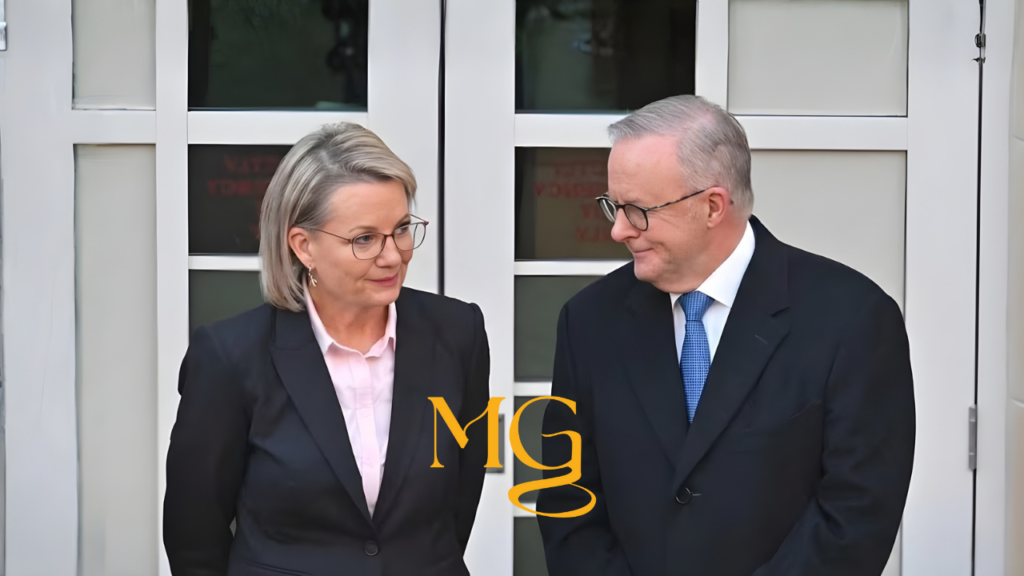
I won’t pretend that yesterday was no big deal. It was.
While I usually try not to get too bogged down in federal politics (there’s more than enough happening at the state level) the implications of what happened in Canberra reach well beyond the Commonwealth, and they will affect our state.
Labor and the Liberal Party combined to introduce an important Bill, with almost no meaningful time for consultation, submissions, scrutiny, or public debate.
For many Australians, that alone was a red flag.
At the eleventh hour, the legislation had been “fixed”—that Labor’s originally flawed Bill had been reshaped into a sharper tool aimed at violent extremism, particularly non-citizen extremists motivated by Islamist ideology.
On its face, that sounds reasonable. Few Australians would object to strong, targeted action against terror threats.
But the core problem remains.
This legislation establishes a minister-led hate-group listing regime, triggered by written advice from ASIO. Once an organisation is listed, a wide range of conduct—including membership, support, fundraising, training, or association—can attract serious criminal penalties.
That concentration of power, even with procedural sign offs, should give us pause. History shows that when governments are given broad, interpretive authority to define what constitutes “extremism” or “hate,” people of faith and conviction are often the first to be scrutinised.
The rushed process only compounds that risk. There was simply no adequate time for rigorous legal analysis or parliamentary accountability.
It is also important to be honest about the existing legal landscape.
The Commonwealth already possesses sweeping visa refusal and cancellation powers under the Migration Act, particularly where a non-citizen fails the character test or poses a security risk. We have seen those powers used in recent years against neo-Nazi figures. Where’s there’s a will, there’s a way.
The issue has never been an absence of law. It has been the selective and inconsistent application of the law.
That concern is reinforced when we consider recent events. On 9 October 2023, two days after the Hamas attacks of October 7, large pro-Hamas crowds gathered outside the Sydney Opera House. While police later clarified aspects of the recorded chants, the broader reality remains: there was no comparable urgency or decisive response in the immediate aftermath of those events.
Enforcement priorities can shift depending on politics, public pressure, and interpretation.
Australian Christians have been clear from the outset: freedom of speech is not some nice privilege granted by government. It is a fundamental human right—the freedom to express beliefs and convictions without fear of state punishment.
We support strong, precise action against genuine terror threats, Islamic radicalism and against those who incite violence. What we cannot support are rushed, poorly scrutinised laws that rely on broad definitions and subjective judgement, and that can be expanded well beyond their original intent.
Consider the proposed changes to the Equal Opportunity and Sex Discrimination reforms in Western Australia.
Yes, they are not the same laws, and they operate in different jurisdictions. But the underlying pattern is familiar: broad definitions, reliance on interpretive decision making, and enforcement mechanisms that can dilute legitimate expression.
We have already seen how views grounded in Biblical convictions about marriage, gender, and family are routinely labelled “harmful” or “extreme” by sections of the political class.
When legislation empowers ministers and bureaucracies to make those determinations, Australians are right to be cautious.
I avoid sensationalism. I assess legislation on its merits and on the facts. But the warning signs here—ambiguity, discretionary thresholds, and concentrated authority—are real.
These are precisely the features that, over time, can be used to narrow the space for lawful dissent and deeply held belief.
Since last night, I’ve received messages from many who feel completely dismayed by their party’s decision to support this Bill. To them, I say this: keep them accountable, ask the right questions but do not give up.
Ask your MPs exactly what they voted for. Ask why a law of this magnitude was rushed through Parliament in a single day. And demand clear commitments to review and wind back these powers if they form government. Remember, politics is a numbers game.
As your Australian Christians Member of Parliament, I will continue to stand for life, faith, family, and freedom. We will not remain silent as governments of any stripe erode fundamental liberties through haste and overreach. And we will not accept reassurances in place of accountability.
If you want leaders who will stand firm when it matters, I invite you to join Australian Christians.
Let’s keep building!
Subscribe to my newsletter!
By submitting this form, you are consenting to receive marketing emails from: . You can revoke your consent to receive emails at any time by using the SafeUnsubscribe® link, found at the bottom of every email. Emails are serviced by Constant Contact